Vietnam The only country where the oranges are green!
Women discuss their regrets / mistakes / hopes / dreams and lack of fruit sales!
About 99.9% of folk here have never heard of the smash hit musical. The poignant love affair that crossed entrenched social boundaries and showcased what a Vietnamese mother would do for her child. Dramatised the frantic frightened final helicopter withdrawal from Saigon as America left But! As we all know what they didn’t achieve with bullets, they achieved with hamburgers and Coca-Cola!
“The Show must go on!” – Queen 1991.
Especially when Vietnam win at football!
You – You light up my life! You give me hope, to carry on! (Debby Boone 1997)
Why does Saigon never sleep at night? why does this girl smell of orange trees?How can I feel good when nothings right? Why is she cool when there is no breeze?
Recycling Styrofoam!
Float on – Float on! (The Foaters 1977)
Definitely not a ‘Slow Boat to China’ – The Vietnamese dislike the Chinese, even so about 30% of their GDP comes from outsourced work from China simply because labour is cheaper here. Both countries are of course Communist states.
A fast car of course is ‘De Rigueur’ for the school run!
Women buying fish from a street vendor. these transactions take a while, inspection of the goods is mandatory as is a long conversation about the meaning of life and what a neighbour wore to a wedding.
‘Take me to Church’. Well actually no. Most wedding celebrations occur in hotels or purpose built wedding venues. The young girls are hired to look beautiful.
Vietnam has one of the lowest divorce rates in the world. This is due to the social acceptance of male indiscretions, money and family. This is gradually changing as modern women become more confident and powerful.
And Relax.
“A Song played on a solo saxophone, so stay with me , hold me tight and dance, like it’s the last night of the world”
‘You’ll never leave Vietnam’. The melodramatic line plucked from the hit musical “Miss Saigon”
Miss Saigon today and there won’t be many more years to experience this extreme, fascinating, social dynamo that snaps at the heels of China.
The tourist laden ‘District one’ is not atypical of the Vietnamese current culture. It is surprising in that most of the globally ubiquitous temples of glass marble and chrome contain far more sales assistants than customers and causes you to ponder whether it’s long term visionary investment or ‘black money’ that keeps the doors open.
No! Move to the suburbs to assimilate the paradox of sights, smells and sounds that will cause you to examine all your values.
Binh Long is a very long street that travels roughly north south on the western side of this rambling city. The current official population of which stands at around nine million but many believe is closer to thirty million people. Some very rich and getting richer, some very very poor with no hope of social advancement. It is a street of many faces and many trades. Wood, metal, glass, motorbikes, toilets, ladders, fans, and markets all grasp for frontage whilst offering a home behind.
A small corner of this ‘Consumer Leviathan’
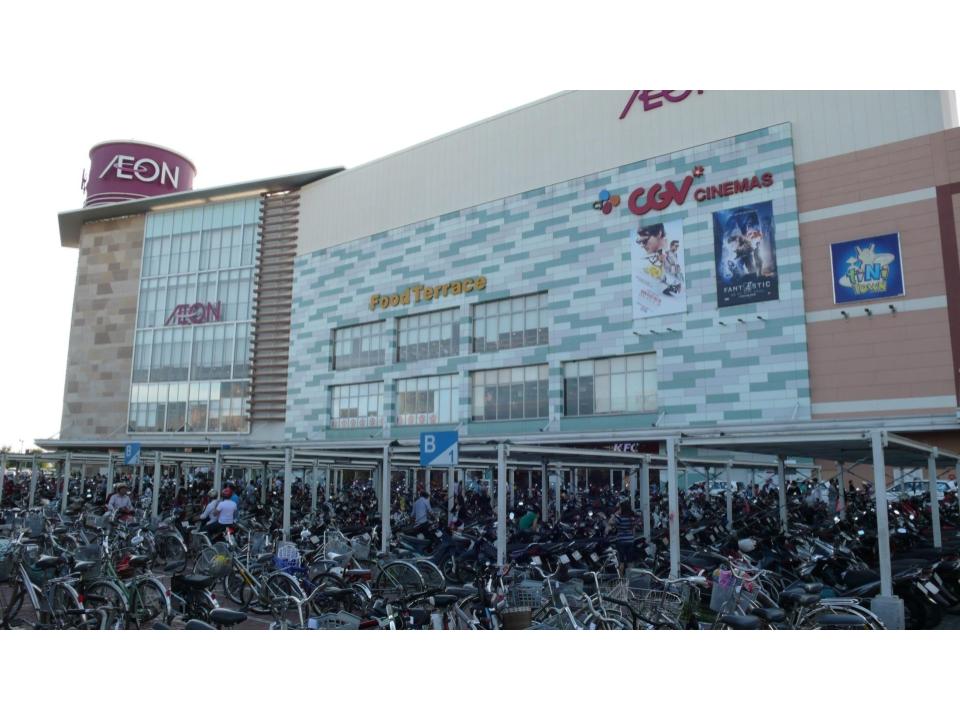
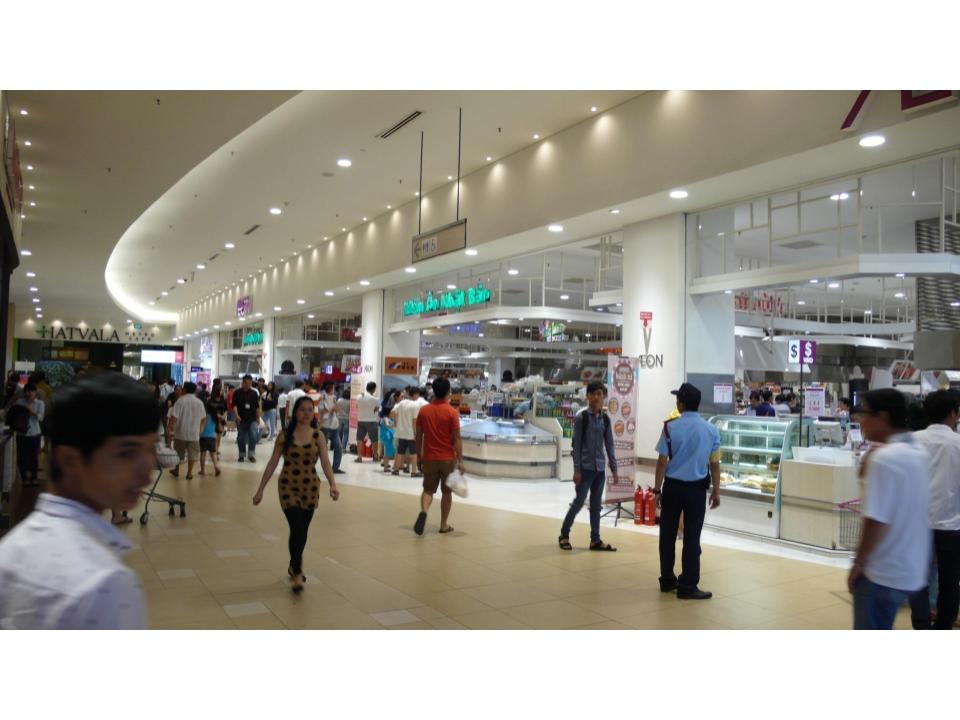
The northern end of the street exists in Tan Phu District, an area to the west of the busy International Airport. An area on the up with a beating heart of green trees called Celadon City. A Japanese development centred on the Aeon Mall, a beacon of modernity that would not be out of place in Milan, Paris or London. The Vietnamese love it. It is always full, families’ line up for photos in it, teenage girls pout and pose for ‘selfies’ in it. People dress up to go there. They are oblivious to the fact that ‘Celadon’ is an exquisite porcelain, originating from Korea but transplanted to Japan after Korea was invaded, occupied and looted of it’s art and gold in the 1920’s. No, Aeon Mall is a ‘cool’ place to be. Japan are big investors in Vietnam, being one of the main financiers in the construction of the city’s first ever underground Metro system.
Aeon Mall on a quiet day! – Over half a Kilometre long on four floors, immaculate and frighteningly efficient!
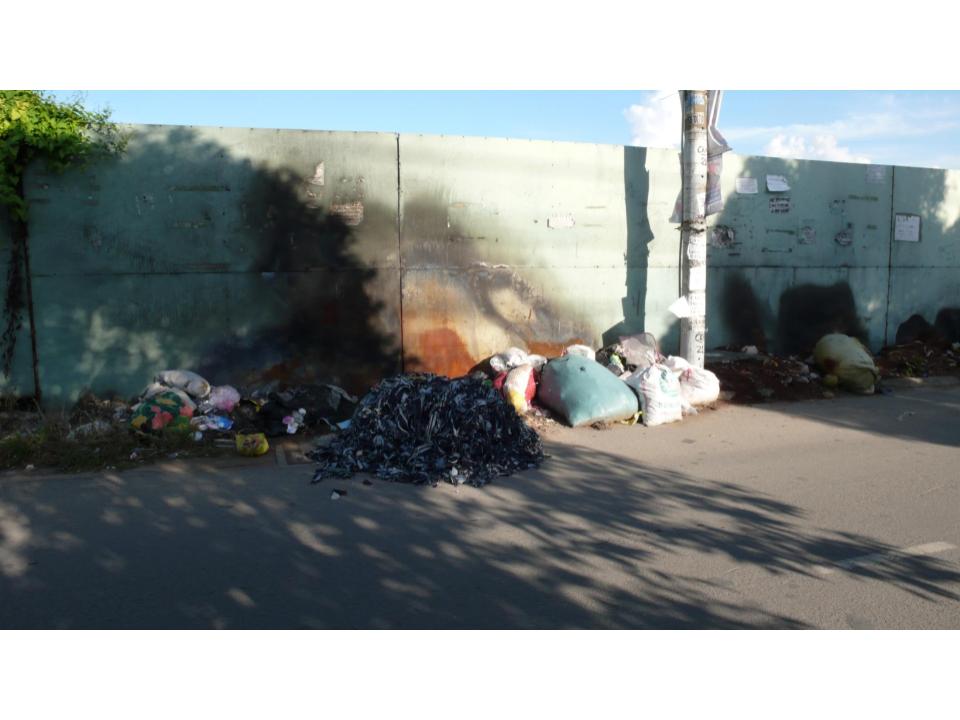
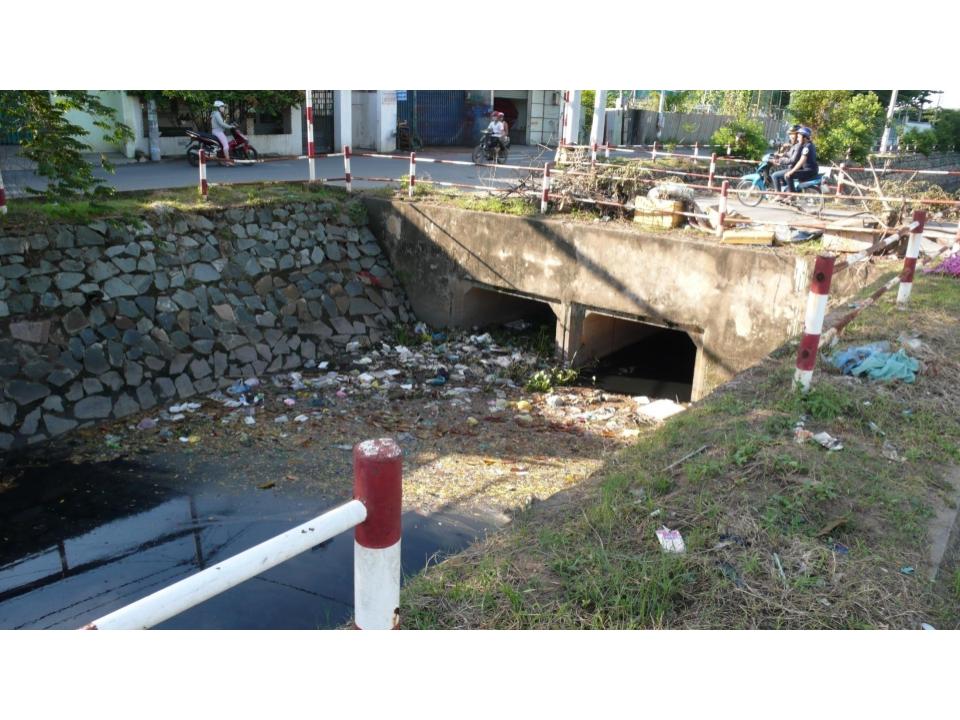
Literally five minutes walking from this brash, noisy, in your face leviathan of modern shopping brings you back into Vietnamese reality where large sacks of discarded acidic coloured fabric remnants are dumped from the back of a motorbike onto the side of a road to be set alight at night, filling the air with black toxic smoke. This material is the waste from countless “front room” businesses, cutting, machining and interlocking the cheap clothes that we buy. Old dilapidated motorbikes ridden by young lean boys convey five hundred legs of jeans to the next house. The next factory, disguised as a home where ten or twelve young people will sit for most of their day in front of ‘chattering’ machines for about one hundred pounds a month. The smoke reflects the blackness of an adjacent canal that rises and falls with the deluge of rain that unloads so quickly and then moves on. The sides of the canal, carefully constructed in stone support flattened broken glass windscreens and smears of discarded paint, old chunks of concrete and a few resilient plants. The bridges over the canal act as blockades to the still tide of floating dirty polystyrene and plastic. It stinks, there is more pollution than water yet still the idle men crouch for hours fishing the black soup, hoping for something for nothing, for everything here has a price, a value.
Fabric off cuts that will mysteriously burst into flame during the night!Like the roads which are constantly swept, this storm drain /canal is regularly cleaned of the plastic that accidentally ends up in it!
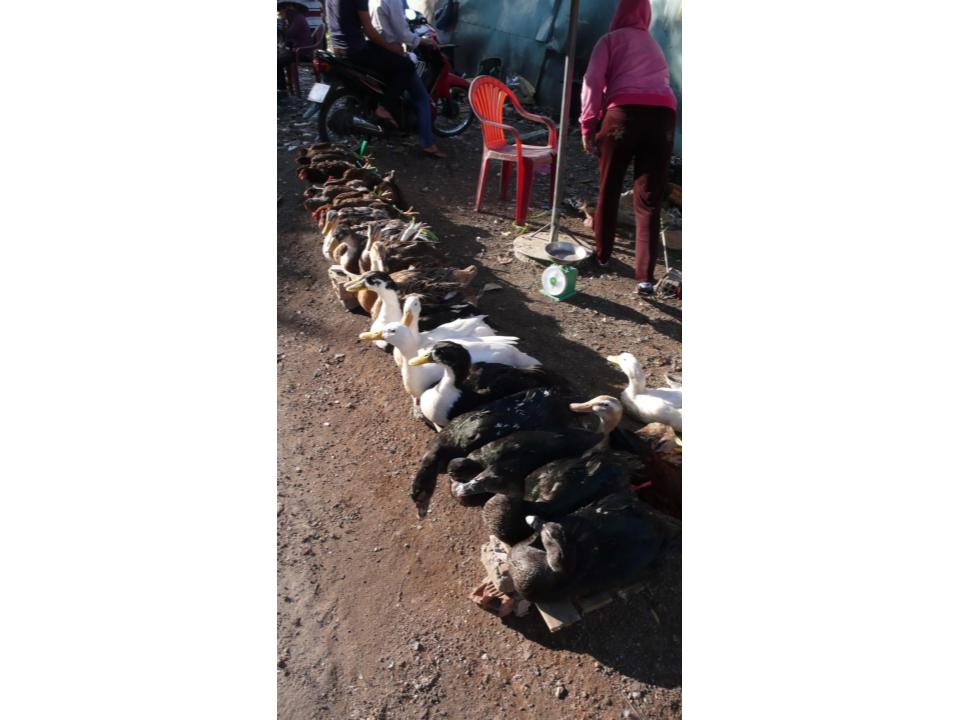
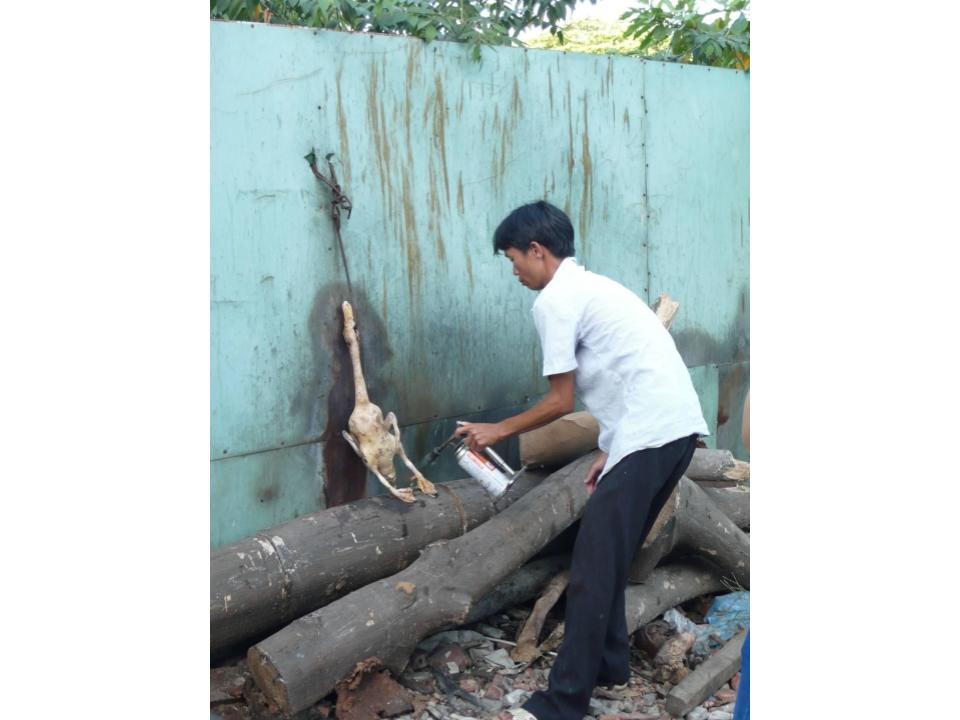
The boundaries of ‘Celadon City’ are guarded by large thin metal sheets painted light green, they are distorted, burnt, covered in posters and signs selling everything, but along Binh Long Street they are a business opportunity, buckled and leaning they still manage to fulfil their task of separating the hard harsh reality from pseudo modernity. A man with a fag on stops his old motorbike alongside a row of tethered ducks, their long necks extended almost into the road, a look of fatal resignation in their eyes. A dirty woman crouches behind the ducks, her conical bamboo hat providing her with shade. Her ducks have no shade. He points to a plump duck, she lifts it by its neck and sits it in a dish on scales. The duck is compliant. The deal is done. She moves a yard to the thin metal sheets on which is fixed an upside down metal funnel, the duck is upended and its neck pulled through. Her rusty, bloody knife enters and saws away at the ducks neck, blood splatters onto the once green paint and after thirty seconds of violent struggle, all is still. Inches away is a five gallon metal drum, now blackened by the fire underneath it, the water inside boils quietly away. Instantly the duck is immersed in the boiling water, still fluttering and jerking. Thirty seconds in the boiling cauldron is enough to loosen the feathers then within minutes the duck is naked and limp, a gas blow torch burns off any residual down from its body and it disappears into a plastic bag. Money changes hands, the man who did not get off his motorbike, rejoins the mayhem that exists as traffic in Saigon.
Burning off residual feathers with a blowtorch
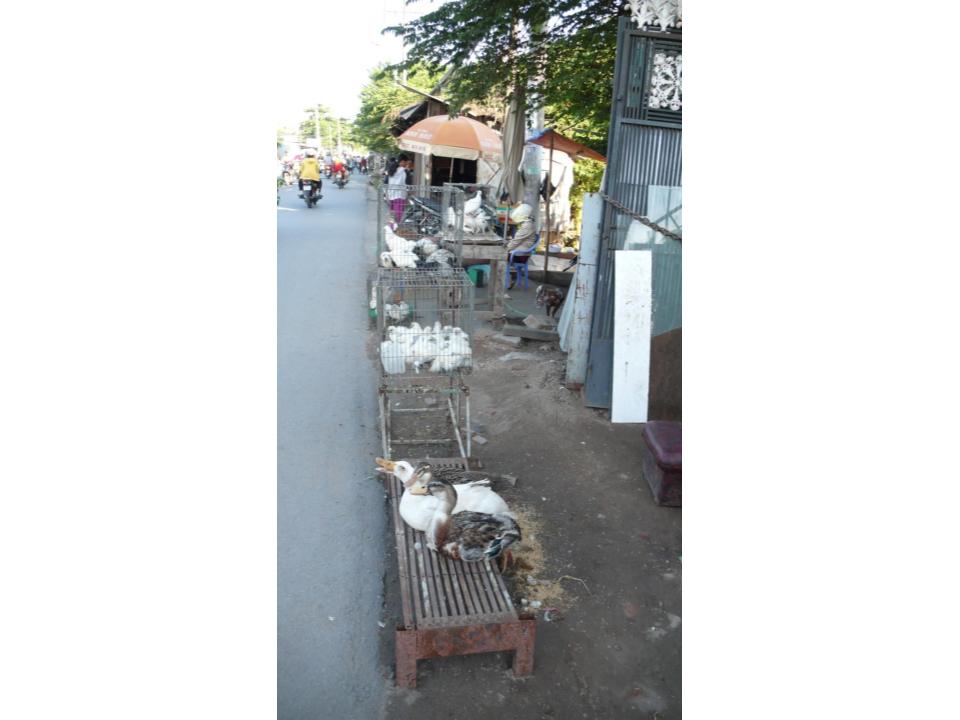
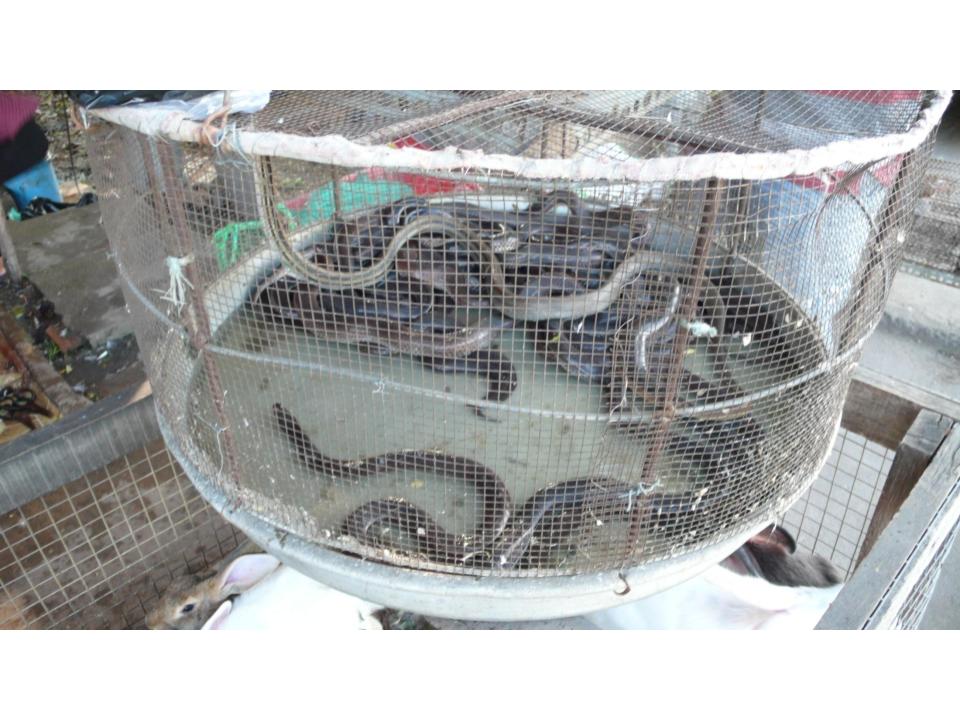
Further down is a stall selling ‘Nouc Mia’ a delicious drink produced from crushed sugar cane, the short pieces of cane are passed through rollers to extract the yellow frothy juice, served over ice in a plastic disposable cup, the cup is usually just disposed of in the gutter. Someone else will sweep it up. It has a value! The crushed sugar cane is fibrous and burns well. On the corner, on a wide new pavement is a pile of the dried out cane being burnt. In the midst of the burning flames is the body of a dog. Its throat has been recently cut, its teeth are barred in a deadly grimace now its fur is being burnt off. In an hour it will have been butchered and displayed on a rudimentary roadside stall. People will look at the quality of the meat, touch it, pick it up and buy it. Further along are cages of cats, pigeons, rabbits, and piglets. Their brother or sister hanging in bits directly above them, they are squashed into small metal cages and occasionally hosed down to keep them cool. An old aquarium serves to display dozens of snakes, occasionally a porcupine is offered but the main fare are chickens, tied together by their legs, they flutter and struggle to no avail until they are released from their suffering by the rusty knife or darkness sees them squashed into raffia shopping bags and trundled home on a motorbike with no lights but a horn.
Doubt if the pigeons will make it ‘home’Apparently, a very good source of protein. I have consumed snake soup in Sembewang Village in Singapore in the 1960’s but I may have been affected by a psychoactive drug at the time!
They are a world apart. Aeon Mall exists in Ho chi Minh City and Binh Long Street in Saigon, separated by time, culture and money but not by distance. It is easy to condemn the brutality of ‘in your face – food chain fact’ displayed on a dirty roadside where your decision results in death. Is it any difference to the plastic covered chicken in the mall? Is a dead dog different to a dead pig, or is it all in our heads.
In our west the food chain is so remote and sanitized that we can happily disregard the disagreeable fact that for every morsel of meat we eat something has died. It is not the case in Binh Long Street.




Recent Comments